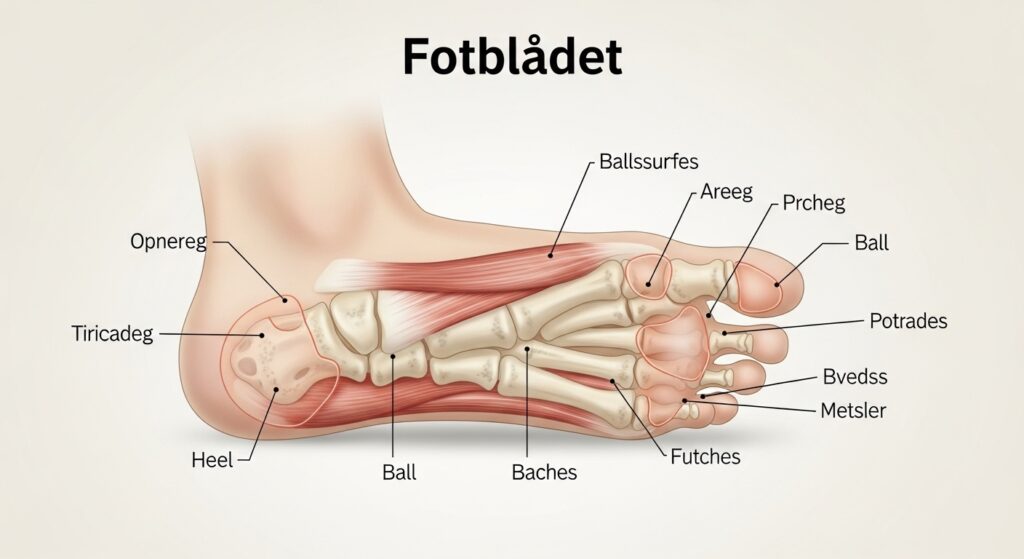
Fotbladet is the lower part of the foot, also called the sole or plantar surface. It is the area that touches the ground when you stand or walk. Fotbladet stretches from the heel to the ball of the foot, but it does not include the toes themselves. Even though it may look simple from the outside, fotbladet has a complex and smart design that helps your body stay balanced and move smoothly every day.
When you walk, run, jump, or even stand still, fotbladet carries your body weight. It works like a natural cushion and shock absorber. Without a healthy fotbladet, simple activities like walking to school or playing outside could become painful and difficult. Understanding fotbladet helps you take better care of your feet and prevent common problems.
The Anatomy of Fotbladet
Muscles and Soft Tissues
Fotbladet contains important muscles and soft tissues that help control movement and keep the foot stable. One of these muscles is the quadratus plantae. This muscle works together with other flexor muscles to help your toes bend properly and stay balanced when you walk. These muscles may be small, but they play a big role in keeping your steps smooth and steady.
There is also a thick band of tissue under fotbladet called the plantar fascia. This tissue connects the heel bone to the front of the foot. It supports the arch and absorbs pressure when you move. If this tissue becomes irritated, it can lead to pain, which is very common in many people.
The Arches of Fotbladet
Fotbladet is not flat. It has special curves called arches. There are two main types of arches: the longitudinal arch and the transverse arch, also known as tverrhvelving. These arches help spread your body weight evenly across the foot. They also act like springs, helping you push off the ground when you walk or run.
As people grow older, these arches can sometimes become flatter. When the arches spread out too much, it can lead to a condition called spread foot, or sprikefot. This can cause discomfort and make it harder to find comfortable shoes. Strong arches help keep fotbladet healthy and well balanced.
How Fotbladet Helps You Move
Fotbladet works closely with the ankle and other foot joints. Together, they allow different types of movements. Dorsiflexion happens when you lift your foot upward. Plantarflexion happens when you point your foot downward. These movements are important for walking, running, and climbing stairs.
Fotbladet also allows inward and outward rotation of the foot. These small movements help you adjust to uneven surfaces like grass, sand, or rocky paths. Because fotbladet is flexible yet strong, it helps your body stay stable and prevents you from falling easily.
Common Problems That Affect Fotbladet
Plantar Fasciitis
One of the most common causes of pain in fotbladet is plantar fasciitis. This condition happens when the plantar fascia becomes inflamed. People often feel sharp pain under the heel, especially in the morning when they take their first steps. The pain may improve during the day but can return after long periods of standing.
Plantar fasciitis usually happens because of too much pressure on the foot. Wearing shoes without proper support can make the problem worse. Taking care of fotbladet early can help prevent long-term discomfort.
Morton’s Neuroma
Morton’s neuroma is another condition that can affect fotbladet. It happens when tissue around a nerve leading to the toes becomes thicker. This can cause burning pain or a feeling like there is a small stone inside the shoe. The discomfort is usually felt in the front part of fotbladet.
Tight shoes can increase the risk of this condition. Choosing shoes with enough space for your feet can help reduce pressure on the nerves and keep fotbladet comfortable.
Heel Spurs
Heel spurs are small calcium deposits that form on the underside of the heel bone. They can create a bony bump that presses into fotbladet. Some people with heel spurs feel sharp pain, while others may not notice any symptoms at all.
Heel spurs often develop together with plantar fasciitis. Good footwear and proper foot support can reduce stress on fotbladet and lower the risk of this problem.
Athlete’s Foot
Athlete’s foot is a fungal infection that usually starts between the toes but can spread to fotbladet. It may cause itching, redness, and peeling skin on the sole. This infection grows well in warm and moist places.
Keeping fotbladet clean and dry is very important to prevent athlete’s foot. Washing socks at 60 degrees Celsius helps kill fungal spores and keeps your feet healthier.
How to Take Care of Fotbladet
Wear Supportive Footwear
Shoes play a big role in protecting fotbladet. Supportive footwear should have good cushioning and proper arch support. This helps reduce pressure on the sole and prevents pain. Shoes that are too flat or too tight can strain the muscles and tissues under the foot.
Choosing the right shoes for sports, school, or work makes a big difference. Comfortable shoes allow fotbladet to move naturally while still giving it enough support.
Use Orthopedic Insoles
Orthopedic insoles can provide extra support for fotbladet. Some insoles are custom made, while others can be bought from stores. They help distribute weight evenly and reduce pressure on painful areas.
People with flat arches or spread foot may benefit greatly from insoles. By supporting the natural shape of fotbladet, insoles can improve comfort and reduce the risk of injury.
Practice Good Hygiene
Good hygiene is another important way to care for fotbladet. Wash your feet daily and dry them carefully, especially between the toes. Moist areas can lead to fungal infections. Clean socks should be worn every day.
Washing socks at 60 degrees Celsius helps remove bacteria and fungi. Keeping fotbladet dry and clean prevents many common foot problems and keeps the skin healthy.
Why Fotbladet Health Is Important
Fotbladet may seem like just the bottom of your foot, but it plays a powerful role in your daily life. It supports your body weight, helps you stay balanced, and allows you to move freely. When fotbladet is healthy, walking and running feel easy and comfortable.
Ignoring foot pain can lead to bigger problems over time. Paying attention to early signs of discomfort and choosing supportive shoes can protect fotbladet for many years. By understanding how fotbladet works and how to care for it, you can keep your feet strong, stable, and ready for every step you take.
Conclusion
Fotbladet is much more than just the bottom of your foot. It is a strong and flexible part of the body that supports your weight, helps you balance, and allows you to move comfortably every day. From the heel to the ball of the foot, fotbladet contains muscles, arches, and important tissues like the plantar fascia that work together to keep you steady and active.
Understanding how fotbladet functions makes it easier to prevent common problems such as plantar fasciitis, heel spurs, Morton’s neuroma, and athlete’s foot. Simple habits like wearing supportive shoes, using proper insoles, and keeping your feet clean and dry can protect the plantar surface from pain and injury.